Understanding the Mazda RX-7 S1: A Look at the First Generation Rotary Icon
The Mazda RX-7 Series 1, often called the S1 by those who work on them, is the car that started the legend. It arrived in 1978, a time when most sports cars were heavy, complicated, and thirsty. Mazda took a different path. They used the rotary engine, a design that swapped pistons for a three-sided rotor spinning inside a cylinder-like chamber. The result was a compact, lightweight powerplant that could rev high and stay smooth. For anyone who has spent time under the hood of these cars, the S1 feels like a piece of engineering that was built to be understood, not just driven.
The S1 is not the fastest RX-7 ever made, but it is the one that matters most to purists. It set the template: a front-engine, rear-wheel-drive layout with a body that weighed around 1,000 kilograms. The rotary engine in the S1 produced about 100 horsepower in its original form, which was enough to make the car feel lively without being dangerous. What made it special was the way it delivered power. There was no piston engine shudder. The rotor spun in a continuous motion, and the exhaust note had a distinct high-pitched wail that still turns heads at car meets today.
The Rotary Engine and Its Quirks
The rotary engine in the Mazda RX-7 S1 is a different animal from a conventional piston engine. Instead of cylinders and a crankshaft, it uses a triangular rotor that orbits inside an epitrochoidal chamber. That shape creates three separate combustion phases per revolution of the rotor. The result is a power cycle that is smooth and compact, but it also creates some unique failure points. The most common issue is with the rotor tip seals. They are small pieces of carbon or metal that slide along the chamber wall. If the engine runs low on oil or gets too hot, those seals wear quickly and the engine loses compression.
Another area that demands attention is the coolant system. The rotary engine generates a lot of heat in a small space, and the S1's original radiator and plumbing were adequate for normal driving but not for sustained high revs. Many owners upgrade to a larger radiator and a better fan setup to keep temperatures under control. The oil pump is also critical because the rotary engine injects oil into the combustion chamber to lubricate the rotor seals. If the oil pump fails or the injector system clogs, the engine can seize in minutes. This is not a car you can ignore. You have to stay on top of the fluids and the cooling.
Common Parts That Need Attention
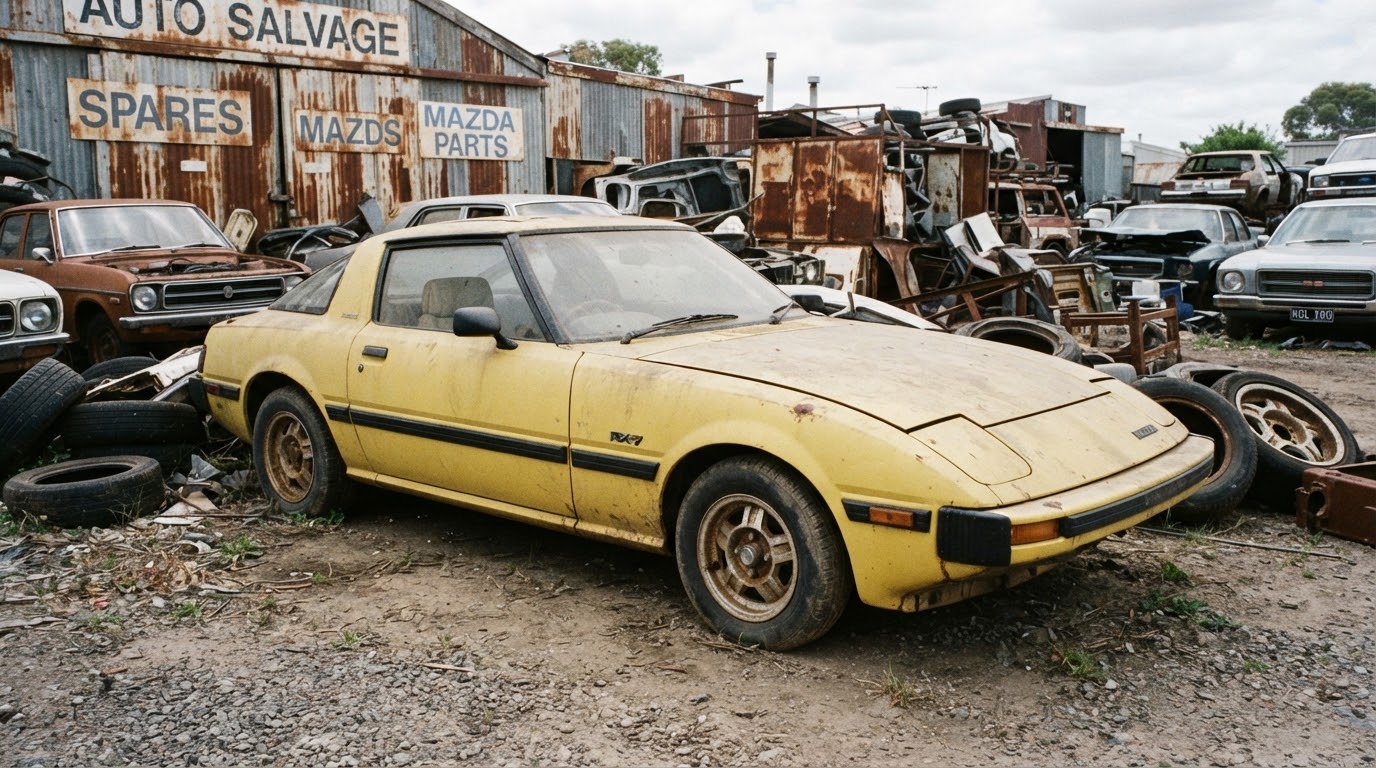
For those keeping an S1 on the road, the usual wear items are not complicated but they are specific. The exhaust manifold on the early RX-7s is prone to cracking because of the heat cycles. A cracked manifold changes the exhaust flow and can make the car run lean, which is bad for the rotor seals. The brake system on the S1 is simple: disc brakes on the front, drum on the rear. The brake lines are old now, so replacing them with modern rubber or braided lines is a common upgrade. The suspension uses a MacPherson strut setup in the front and a live axle in the rear. The rubber bushings dry out after a few decades, so a suspension rebuild is almost always part of any serious restoration.
The transmission in the S1 is a four-speed manual. It is not particularly strong by modern standards, but it handles the stock torque fine. The clutch is light and the throw is short, which makes the car fun to drive in traffic. The steering wheel is a simple two-spoke design that feels thin in your hands. It is one of those details that reminds you this car was designed in the 1970s. The steering itself is direct but a bit vague near center, which is typical for a car of that era with a recirculating ball steering box.
Why the S1 Still Matters Today
There is a reason the Mazda RX-7 S1 still has a following. It is not the most powerful or the most refined car Mazda ever made, but it is the one that proved the rotary engine could work in a mass-produced sports car. The S1 is the foundation. Every later RX-7 builds on what this car started. The design is pure and uncluttered. There is no extra weight, no unnecessary electronics. It is a drivers car in the truest sense. You feel the road through the steering wheel, you hear the engine through the exhaust manifold, and you adjust the fuel mixture by listening to the way the rotor spins.
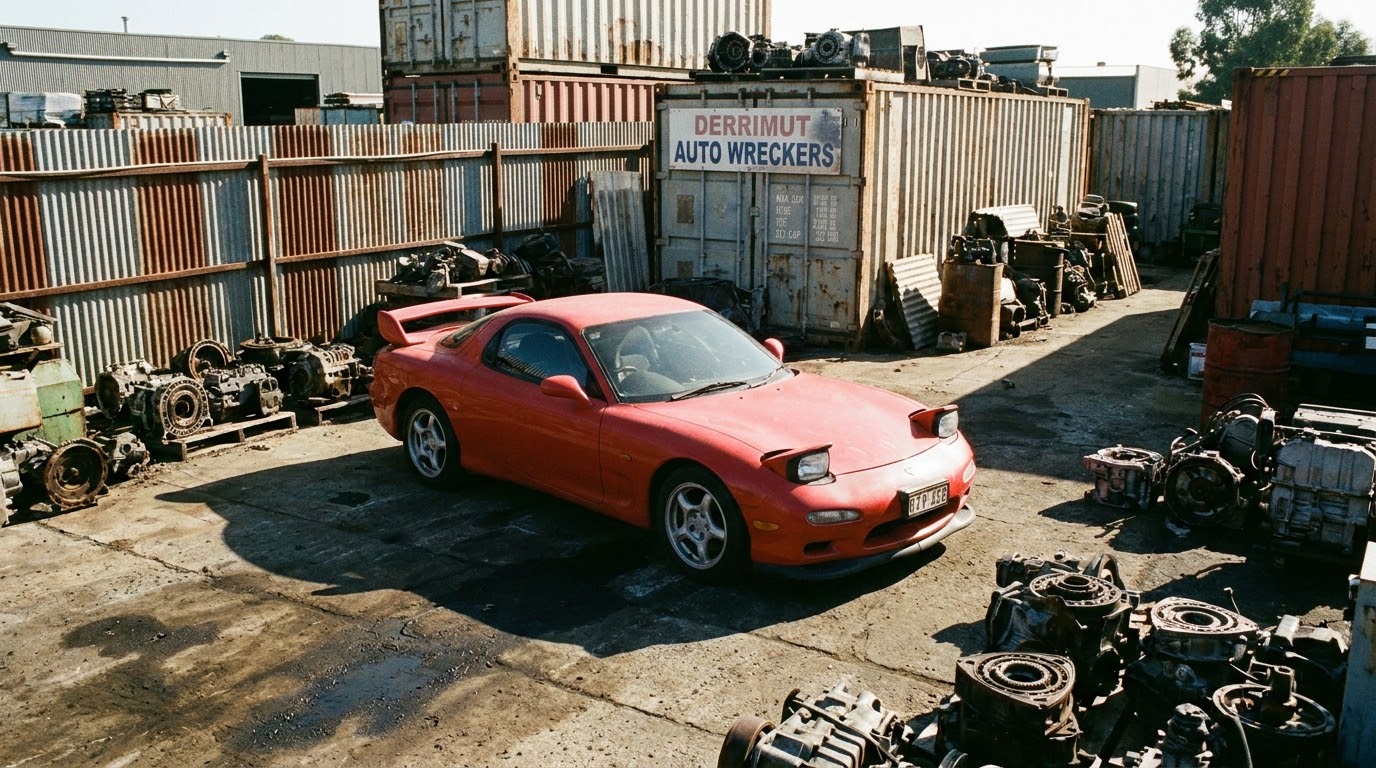
For those of us who work on these cars, the S1 is also the easiest RX-7 to maintain. The engine bay has room to move. The wiring is simple. The used parts market is still active, and specialists like Just Rotaries in Melbourne carry a steady supply of components from dismantled rotary-powered Mazdas. Whether you need a complete engine, a transmission, or just a set of injectors, the support network is there. The S1 never really went away. It just moved from showrooms to workshops, where it still gets the attention it deserves.

Keeping an S1 Alive in 2025
If you own a Mazda RX-7 S1 today, you are managing a machine that is over forty years old. The rubber degrades, the metal corrodes, and the seals wear. But the fundamentals are solid. The engine block is cast iron. The rotor housing is chrome-plated. The cylinder walls are hard-wearing if they are kept lubricated. The key is to treat the car as a mechanical system that needs regular attention, not as a museum piece. Drive it. Let the engine get up to operating temperature. Check the oil level every time you fill the tank.
The injector system on the S1 is mechanical and reliable, but the oil metering pump can drift over time. If you run the car hard, consider upgrading to a pre-mix system where you add oil directly to the fuel. That gives you more control over lubrication and removes one variable from the equation. The coolant system should be flushed every two years. Use a quality antifreeze that protects against corrosion, because the aluminum parts in the engine can pit if the coolant goes acidic.
The brake system is safe but dated. The original drum brakes on the rear are adequate for normal driving, but if you plan to drive aggressively, a conversion to rear discs is a common modification. The suspension bushings should be inspected every few years. The stock rubber bushings are soft and degrade over time, which makes the car feel loose. Polyurethane bushings are a popular upgrade and they tighten up the feel without adding harshness.
Final Thoughts on the S1 Experience
The Mazda RX-7 S1 is not a car for everyone. It is slow by modern standards, it has no airbags, and the rotary engine requires a level of engagement that most drivers are not used to. But for those who appreciate the engineering, the S1 offers something rare: a direct connection between the driver and the machine. Every sound, every vibration, every temperature change tells you something about the state of the engine. You learn to read the car the way a mechanic reads a workshop manual.
If you are looking for a project car that teaches you about mechanical systems while still being fun to drive, the S1 is hard to beat. The parts are available. The community is knowledgeable. And the car itself rewards attention with a driving experience that no modern car can replicate. The rotary engine is a conversation starter, but the S1 is more than that. It is a piece of automotive history that still has plenty of life left in it.